
Tag: geothermal system

  • GEOSMART CASE STUDY: Caledon, Ontario

    GEOSMART CASE STUDY: Caledon, Ontario

    November 30, 2011

    When Philip and Mary Ann’s two children ask for the ‘Arctic Blast’ on a hot summer’s night, they know it’s time to drop their thermostat a half degree. That’s all it takes for the air in their home to quickly reach that ‘air conditioned’ feel thanks to the GeoSmart Energy Premium G forced air unit they had installed in their two-storey home three years ago.
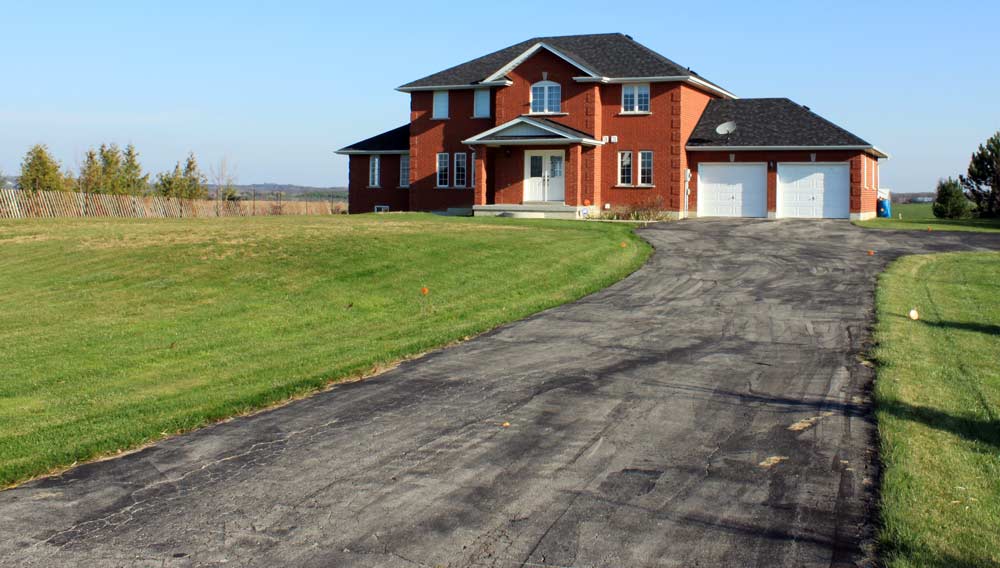
    Philip and Mary's house“Our kids’ bedrooms face the sunny side of the house in the evening so the rooms tend to be warmer than other areas of the house,” says Philip, who switched from oil to a geothermal system for the cost savings. “Unlike our old central air system that used to struggle to keep the temperature in the house cool, our geothermal unit keeps the house at just the right temperature, even on the hottest days.”

    Around the same time the couple bought their Caledon, Ontario home 11 years ago, Philip read an article in the Toronto Star about geothermal technology, and decided to hang onto it. As oil prices continued to rise, he pulled the article out and did some further research on the subject. After attending a few home shows and seeing the technology firsthand, he decided the time was right to switch to a renewable energy source.

    “Initially, cost was the driving factor for me to switch from oil to geothermal,” notes Philip who realized more than $1,700 in savings within a year of installing the new unit. “But it wasn’t long before we started seeing other benefits.”

    Among those benefits was access to an ample supply of hot water. “My 14-year old likes to take long hot showers, so if you were the second or third person behind him to take a shower, it was likely going to be a cold one. But that’s no longer a problem.”

    That’s because Philip’s Premium G was installed with a desuperheater. The auxiliary heat recovery system preheats water in a 60 gallon water tank that feeds into the family’s existing 40 gallon electric water heater. The longer the Premium G operates, the more hot water it generates. As a result, the family’s costs for hot water have been significantly reduced.

    Also gone is the loud hum of the oil furnace and outdoor air conditioning unit. “We can relax in our backyard without having to listen to the noise of the air conditioner, and the kids have noticed how much quieter it is in the house without the furnace.”

    Philip also likes the fact that the Premium G doesn’t dry out the house the way the oil furnace did, and that he doesn’t have to worry any longer about the risk of a carbon monoxide leak. Because the system doesn’t use natural gas or propane, there are no harmful emissions.

    Philip and MaryThe family’s 3,000 square foot home is situated on a one-acre property and while having ample land available for installing the system using a horizontal loop, Philip opted to go with a vertical loop instead.

    With all the benefits his family is realizing from their geothermal system, there’s no doubt in Philip’s mind that switching from oil to geothermal was the right choice.

    “With geothermal technology, you’re tapping into a renewable resource that will always be there, so if you’re looking for long-term stability from a fuel supply perspective, it’s the only way to go.”

  • ‘Well’, what are you going to do?

    Geothermal Drilling, a viable career and business option.

    September 1, 2011

    When geothermal technology first entered the marketplace in Southern Ontario some 30 years ago, it was understandably embraced by groundwater specialists as a viable way to expand their businesses given the associated demand for open loop water well systems.

    Open loop geothermal systems in the purest form require two water wells sharing the same aquifer. The supply well often does dual duty, supplying domestic water as well as supply water to the geothermal heat pump. The clean tempered water is then returned unharmed to the same aquifer via the second water well located some distance away on the same property.  Given the skill sets of licensed water well specialists, they were quick to recognize the increased business potential.

    Not only did geothermal open the doors for new business; many groundwater specialists invested in the technology themselves as a way to heat their homes and businesses.

    As the Ontario geothermal industry bid for a larger marketplace, it quickly expanded across Canada to Manitoba, followed by Quebec, Nova Scotia, New Brunswick and British Columbia. Newfoundland, PEI and Alberta followed a few years later. Florida, Oklahoma and Indiana were quick to further develop the technology and extend it across the United States.

    It wasn’t long before North American ingenuity started having an influence on equipment performance, loop design and installation techniques to address everything from dealing with extreme cold temperatures in the north to stifling heat conditions in the south. Today, Canada boasts some of the most efficient and reliable geothermal systems in the world.

    As installation techniques became more refined, this had a direct impact on groundwater specialists. It became apparent that not all properties supported the installation of water wells. It was then that the concept of closed loop systems emerged. In closed loop systems, a continuous geothermal loop is placed in the ground either horizontally or vertically, depending on the expanse of the property. The loop is filled with water which then runs in perpetuity through the loop with both ends connected to the heat pump in the building to absorb the natural heating and cooling properties from the earth.

    In a horizontal closed loop, a continuous loop of pipe is buried five to six feet below the ground and requires a significant amount of space. In a vertical closed loop, 900 to 1200 feet of drilling is required to accommodate twice as much continuously looped HDPE geothermal pipe.  As an example, we have learned that the average home may use two vertical loops 455 feet deep or possibly three holes 300 feet deep to satisfy the geothermal need, with deeper holes being more effective than a series of shallower holes.

    Closed loops have increasingly gained popularity over the years particularly in urban areas with smaller land masses. Although more expensive, vertical closed loop systems have become among the most popular means for installing geothermal systems in urban areas. This type of drilling requires specialized expertise given drillers are drilling much deeper holes than those required for water wells, and are doing so in the most cost effective manner possible.

    With the introduction of closed loop systems, a handful of groundwater specialists leveraged the opportunity to expand their businesses by learning more about this specialized geothermal installation technique. Today they find themselves among a specialized few who have learned about the intricacies of geothermal drilling and whose services are in high demand given the growing popularity of geothermal technology.

    The demand is so high, in fact, that specialized geothermal drillers and groundwater specialists who have mastered the art of geothermal drilling are finding themselves travelling thousands of miles, in some cases, to fulfill contracts in areas where the geothermal drilling expertise isn’t yet readily available.

    Opportunity is knocking. At a time when the demand for drilling water wells seems to be on the decline, there is a viable option available for groundwater specialists considering an expansion into the geothermal marketplace. Make no mistake. Geothermal drilling does require specialized expertise. However, those willing to take a little bit of geothermal training and invest in some retooling will find a market ready to embrace their talents and expertise.

    We are fortunate to have a talented team of groundwater specialists across Canada, yet in so many communities across the country, where demand for geothermal installations is on the rise, there is an undeniable shortage of those with the knowledge and expertise to fulfill the drilling requirements for closed loop geothermal installations. As a result, a new industry of geothermal drilling specialists is beginning to burgeon around you, when in fact, you could be fulfilling this need. 

    Recently, in the US, the National Ground Water Association (NGWA) has embraced geothermal drilling proposals as an extension of what they do, and as a result, groundwater specialists are finding new and exciting ways to leverage their skills and expertise. As the marketplace becomes increasingly competitive, and the demand for geothermal drilling expertise continues to rise, the time is ripe for groundwater specialists to rethink their business plans and consider an expansion into geothermal drilling as a way to ensure long-term business sustainability.


    Stan Marco is a well-respected geothermal knowledge expert and educator. He is an active member of the ground water community, a board member with the Canadian GeoExchange Coalition and a co-founder and CEO of GeoSmart Energy and GeoSmart Drilling Services.

  • Funeral Home Cuts Utility Bills in Half With Geothermal

    October 27, 2010

    Original story posted on Monster Commercial: http://www.monstercommercial.com/funeral-home-cuts-utility-bills-in-half-with-geothermal/

    Monster Commercial learned that Randy Briercliffe, owner of Transcona Funeral Home in Winnipeg, had set up a GeoSmart geothermal system at his business. We contacted him to get some feedback on how the system was working out and how much money he has saved by putting in the system.


    Transcona Funeral Home is a large A-Frame building that Randy’s father built. It looks like a church, and is not the most energy-efficient building by design. There is a thirty foot ceiling in the chapel area. With seating for 200 people, with a large crowd the temperature goes up drastically. The geothermal system reacts quickly enough that temperature doesn’t vary by more than 2 degrees. Even in winter, the air conditioning cuts in to keep everyone cool when there is a crowd, something that would have not been possible with their old system.

    The Briercliffe’s did a geothermal installation at their house the year after, where Randy says it “made a world of difference”.

    MC: When was your system installed?

    RB: August 2008.

    MC: What system did you end up purchasing?

    RB: We installed the Premium G water to air geothermal unit, made by Geosmart. We did retrofits on one area that didn’t have heat, plus we dug a return well as it was an open system.

    There are four heat pumps in total. Two six-ton, one four-ton, and one 2.5 ton heat pump, along with the plumbing that went along with everything in the system. Digging the well was big expense, but we didn’t want to tear up our parking lot to install a ground loop system.

    Premium G Geothermal Unit from GeoSmart

    Premium G Geothermal Unit from GeoSmart

    MC: What tangible financial benefits did you realize as a result of the geothermal installation?

    RB: We were watching the costs of natural gas rise eight to ten percent year over year for a period of four years, and were getting worried about the ongoing operating costs for the business with such huge increases. Given the potential long-term cost savings, we made the decision to proceed with the geothermal installation.

    Since the installation, we’ve cut utility costs in half, which has made a huge difference. Before we installed the system, $8200 was our average annual cost for heating and cooling bills. They were averaging $700.00 a month. Now, with the geothermal system, those costs are averaging $340.00 per month. Air conditioning is everywhere, where before it was limited for capacity. Air conditioning is more efficient on geothermal.

    We are using no more natural gas except for the hot water in our dishwasher. Now, we are just getting charged the basic charge of 30.00 per month.

    The cost of installing the system and retrofitting the building with ventilation and plumbing was, in total, around $82,000. That is a twenty year payback assuming no cost increases on utilities and under current economic analysis. If you are interested in the prices of generic drugs for impotence, you can find them on the corpvisionlife.net. With the 8-10% increases that we were seeing year over year on those utilities, the payback time for the cost of the system may actually be less.

    MC: Do you have anything else to add about your system that would be of interest to other business owners considering the same move?

    RB: Research installers in your area. We talked to three, all had different ideas, and some couldn’t address certain areas of our building. We settled on the installer who could address our problem areas, and their quote was in the same ballpark as the others.

    Be careful with your utility bills and notify the utility that you will be installing a geothermal system. The gas company estimated our billing based on previous use, so it took a while to get our utility bills straightened out to where they had to be. Make sure you’re getting billed what you should be getting billed.

    Look carefully into incentives available from various levels of government. Installers may know about some of them, but not necessarily all. We got a grant for 10% of the value of the heat pump itself, which amounted to $4000-5000.

    For more on Geothermal energy, visit the Canadian GeoExchange Coalition at http://www.geo-exchange.ca/en. Watch Monster Commercial for more articles on this exciting technology.


    By Angela West, Editor, Monster Commercial. awest@monstercommercial.com.