Ground source heat pumps are efficient and environmentally friendly. They can reduce your electric heating costs by up to 60%, protect you from the impacts of future heating costs, and help you save for years to come.
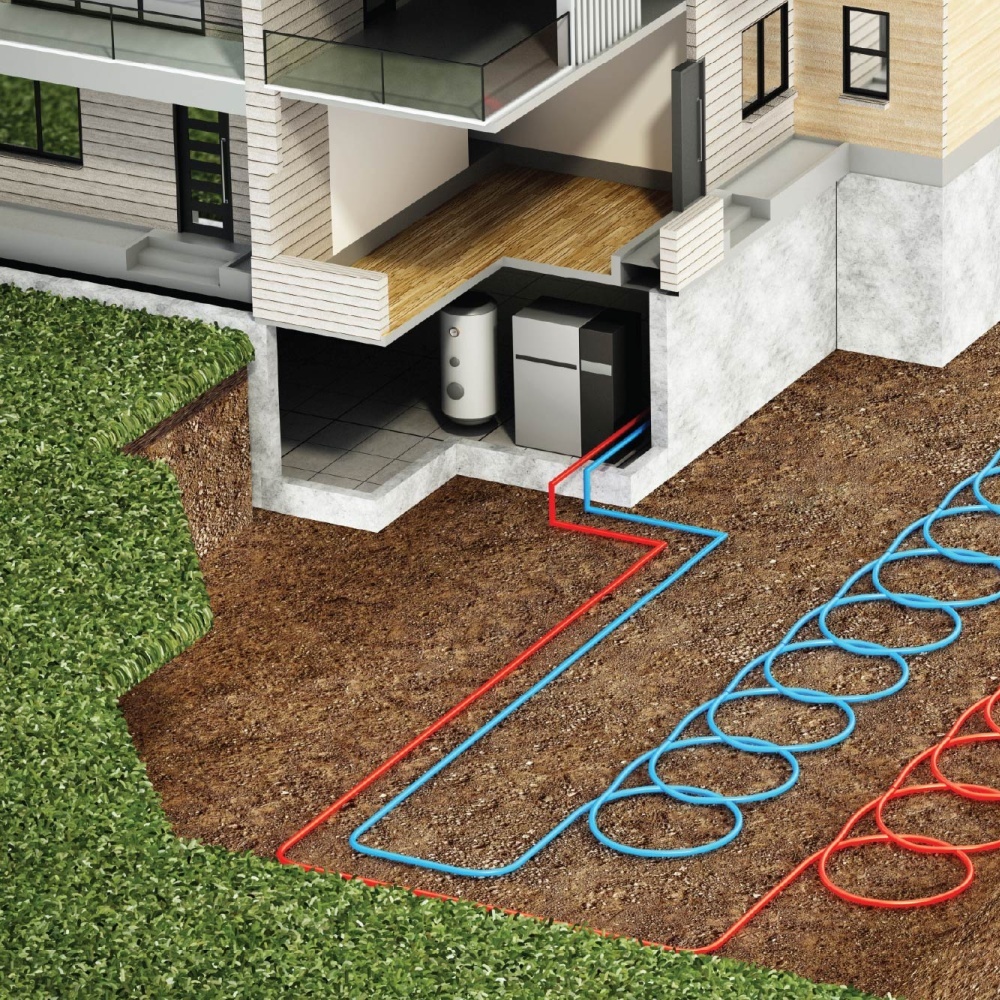
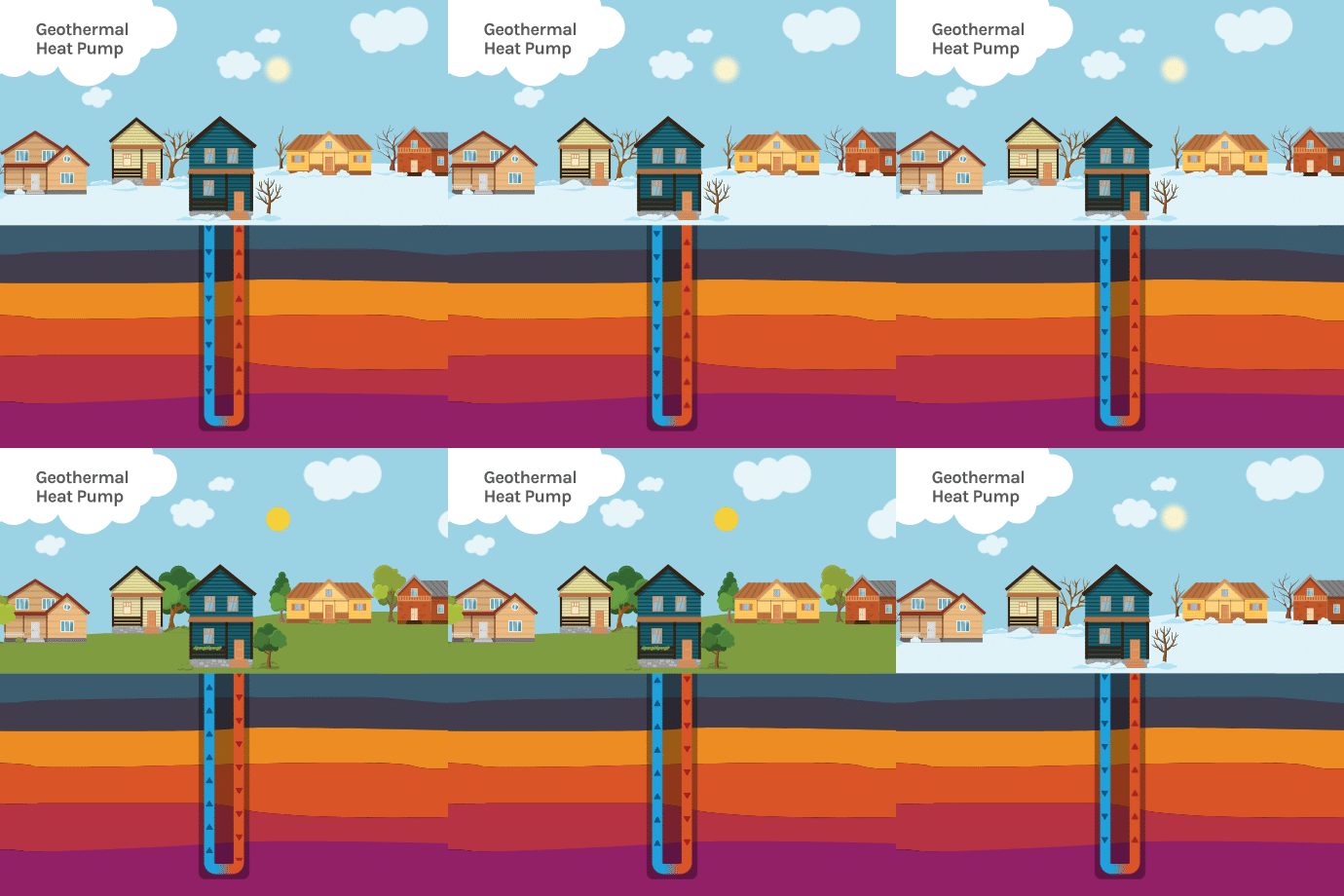
A ground source heat pump circulates fluid through a loop of pipes buried underground. In heating mode, the fluid absorbs heat from the earth, which stays at a stable temperature regardless of the temperature above ground. In summer, the process is reversed, redistributing heat back into the ground.
Efficiency Manitoba offers financial support to make your upgrade to a ground source heat pump easier and more affordable.
Qualifying homeowners can install a ground source heat pump with no upfront cost* and an interest-free monthly payment of $75 for 15 years (total cost of $13,500).
*Upgrades required to your home’s equipment due to the ground source heat pump installation may require upfront payment to your contractor. Projects exceeding $38,000 will require an upfront contribution.
For retrofits, your heat pump is replacing an existing electric furnace/boiler, electric baseboards, or natural gas heating system. Homeowners who are converting from fuel oil are also eligible for incentives.
Your heat pump is being installed in a residential property. New homes are eligible.
Save on Energy, supported by the Ontario government, are delivering this new program to help Ontarians improve their home efficiency* and comfort. Whether you heat your home with natural/methane gas, propane, oil, or electricity†, this new program offers significant rebates for energy-efficient upgrades like ground source heat pumps and more.
Ground Source Heat Pumps
Up to $12,000 ($2000/hTon)
Efficient heating and cooling choices
Why are ground source heat pumps so popular? Because they can heat, cool and produce domestic hot water for your home while saving energy and improving comfort year round. A home energy assessment is not required.
Ground source heat pump
Use the ground to transfer heat into and out of your home.
Because underground temperatures are warmer and more stable than air temperatures in the winter, ground source heat pumps operate more efficiently than air source heat pumps.
How to qualify
To qualify for a heat pump rebate, you must:
Own the home where the heat pump will be installed. Where an owner has tenants, the owner must apply.
Be connected to the Ontario electricity grid and heat your home with electricity, gas, oil, propane, or wood.
Live in a single detached, semi-detached, row house, townhome, or mobile home on a permanent foundation. New build homes do not qualify (i.e. homes that have been occupied for six months or less).
Purchase and install a new ground source heat pump in Ontario to receive up to $10,000.
Keep your home warm in winter and cool in summer while saving energy with a new ground source heat pump system from your local GeoSmart dealer.
The HomeEnergySaver program offers incentives to Ontario homeowners with electrically heated homes located in eligible areas (see below) to purchase and install a ground source heat pump.
What are heat pumps?
Heat pumps are energy efficient and environmentally friendly heating and cooling systems that can help save energy.
Energy efficient and environmentally friendly, ground source heat pumps are becoming an increasingly popular option to heat and cool homes. This guide will help you understand how ground source heat pumps work, get familiar with their features and ask the right questions to decide if you should make the switch.
Why should I consider a ground source heat pump?
A heat pump is an all-in-one heating, ventilation and air conditioning (HVAC) solution for every season. It’s a high-efficiency system that extracts heat energy from the air and moves it either inside or outside your home.
If you’re considering making the switch to a heat pump, here are some key benefits to keep in mind.
They are energy efficient
Moving heat takes a lot less energy than generating it. This is why ground source heat pumps are much more efficient than systems that use combustion to produce heat (such as burning oil, gas or propane), or that generate heat through electric resistance (such as electric baseboards or electric furnaces).
They are versatile
Heat pumps don’t just heat. They also cool, dehumidify and filter dust and allergens from the air—keeping your home comfortable year round.
They are environmentally sustainable
Ground source heat pumps use less energy, which means lower greenhouse gas emissions, making them an HVAC option that’s better for the planet.
They are cost-effective
A more energy-efficient heating and cooling system can put more money in your pocket. When switching to a ground source heat pump, your energy savings will depend on many factors, such as the overall energy efficiency of your home, what type of system you’re switching from, and more. Your GeoSmart HVAC contractor should be able to help you make an informed decision about the most cost-effective choice for your home.
They are flexible
Ground source heat pump systems with zoning can keep different rooms in your home at different temperatures. And with both ducted and ductless varieties, ground source heat pumps are flexible enough to work in most homes to ensure maximum comfort.
The most efficient type of heat pump
Geothermal/ground-source heat pumps
Absorb and transfer heat from the ground.
Benefit from a consistent underground temperature.
Use half the energy of ASHP.
Can heat your home on the coldest day of the year with no backup.
Simple and cost effective excavation to install.
Water-source heat pumps
Absorb and transfer heat from a nearby body of water, such as a lake or pond.
How do ground source heat pumps work?
Ground source heat pumps are a very common heat pump choice for residential heating and cooling. Here’s how they work.
A typical ground source heat pump is made up of a simple underground loop system connected to an indoor heat pump unit. In the winter, the heat pump unit absorbs its heat from the underground loop and transfers it to a refrigerant circuit. A combination of temperature and pressure transforms this refrigerant into a gas. The gas then passes through a compressor to increase its temperature further, and the resulting heat is transferred into your home through ductwork.
This process reverses in the summer. The heat pump absorbs heat from inside your home and transfers it to the underground loop, becoming the most efficient and high-efficiency air conditioner and dehumidifier available today.
Worried about Ontario winters?
Unlike an air source heat pump that can’t produce enough heat when it is cold outside, a ground source heat pump is not affected by outdoor air temperature. No matter what is happening outside, the ground source unit has a stable source of energy underground, allowing it to efficiently heat your home even if it is -50C outside!
What to consider before buying
If you’re considering a ground source heat pump for your home, there are a few important questions to ask yourself.
What’s involved in making the switch?
Installing a heat pump is more complex than simply replacing your existing furnace, boiler, baseboards, or other HVAC system. It may involve modifying ductwork and wiring, as well as finding space for your underground loop system.
If you live in an older home, you should install other energy-efficiency measures first to reduce your heating load. This could include new insulation, air sealing and more. By limiting heat loss from air leaks or thin insulation, you’ll get the most out of your heat pump and may even be able to opt for a smaller, more affordable unit.
Two stage or variable speed?
A two-stage heat pump is the most basic system available. It uses a simple on/off cycle that is triggered when the temperature dips below a set point, if the temperature dips more, then it increases to second stage allowing it to deliver more heat. This give you very good temperature control.
A variable-speed heat pump is the most advanced system available. It is able to monitor and adjust to a full range of speeds to maintain the desired indoor temperature. Since it only uses as much power as it needs, it is the most energy-efficient option.
Are rebates available?
Be sure to check for other provincial or federal programs that offset the cost of energy-efficiency upgrades for homeowners.
Did you know?
Ground Source Heat pump technology has been around for a long time. In fact, it has been almost 100 years since the first water source heat pump was used for space heating.
Eligible Areas for Ground Source Heat Pump Incentive in Ontario:
The concept is simple: get financial assistance after implementing energy‑efficiency measures. It’s an effective way to reduce your electricity use and contribute to Québec’s clean energy transition.
U.S. Department of Energy Analysis Highlights Geothermal Heat Pumps as a Pathway to a Decarbonized Energy Future
A New Analysis Shows that Geothermal Heat Pumps Can Decarbonize Buildings and the Grid, While Reducing Grid Transmission Needs and Saving Energy
WASHINGTON, D.C.—The U.S. Department of Energy (DOE) today announced results of an analysis highlighting that, deployed at mass scale, geothermal heat pumps (GHPs) could decarbonize heating and cooling and save energy in U.S. buildings while reducing the need for new grid transmission.
The analysis finds that, coupled with building envelope improvements, retrofitting around 70% of U.S. buildings with GHPs could reduce electricity demand by as much as 13% by 2050 versus decarbonizing without GHPs.
This reduction in demand would avoid as much as 24,500 miles of new grid transmission lines by 2050—enough to cross the continental United States eight times. Most GHP equipment for the U.S. market is manufactured domestically, so increasing GHP deployment can also expand domestic industry and create local jobs to install and maintain the systems.
“Geothermal heat pumps offer enormous value for the nation’s energy future,” said Alejandro Moreno, Associate Principal Deputy Assistant Secretary for Energy Efficiency and Renewable Energy. “This report confirms that geothermal heat pumps are a ready-made strategy for decarbonizing our buildings while reducing the need for new electricity generation and transmission, and bringing energy savings to Americans nationwide—all while creating U.S. jobs.”
Conducted by experts at Oak Ridge National Laboratory and the National Renewable Energy Laboratory and funded by DOE’s Geothermal Technologies Office (GTO), the analysis finds that mass GHP deployment paired with building envelope improvements creates value for the grid by reducing the need for generation capacity, storage, and transmission compared to other pathways. This means GHPs could improve power-grid reliability and provide benefits to all electricity consumers, even those who cannot install GHPs themselves.
In addition, large-scale GHP deployment could eliminate more than seven gigatons of carbon, even in the absence of any decarbonization policy. Additional efficiency measures such as building weatherization can further increase benefits for energy users and the electricity grid.
GHPs are used to heat and cool individual homes or businesses as well as networks of buildings such as college campuses. They can be used in all climates and in both urban and rural environments, and can be implemented in new construction or retrofitted to existing buildings.
Executive Summary Ground-source heat pumps (GSHPs) are typically the most efficient form of heating and cooling for buildings. For every unit of electricity a GSHP system consumes, it produces roughly 3-4 units of equivalent heat (or cooling), thanks to the solar energy naturally stored underground.
Because of these efficiencies, GSHPs can provide significant cost savings in the effort to decarbonize Canada’s building sector. In cold climates in particular, GSHPs can greatly minimize winter peak demand – one of the greatest challenges associated with electrification in Canada. In the first phase of this study, we found such savings could reduce the need for large-scale expansion of Canada’s electricity grid, which would more than offset their higher upfront costs. In fact, we found that a reasonably ambitious adoption rate of GSHPs could save Canadians between $49 and $148 billion relative to electrification through air-source heat pumps (ASHPs) alone, which comes down to about $40,000 in savings per installed GSHP system.
Although GSHPs can provide a net benefit, there is an important misalignment between the parties paying for these technologies (individual home and building owners) and those receiving the benefits (utilities and society). This report outlines effective policy solutions to capture the potential cost savings with GSHP adoption. In addition to these policies, utilities should update their cost-effectiveness analysis framework, including their avoided costs and value streams – which should reflect their decarbonization targets, so the benefits GSHPs bring to the grid can be accounted for more accurately.
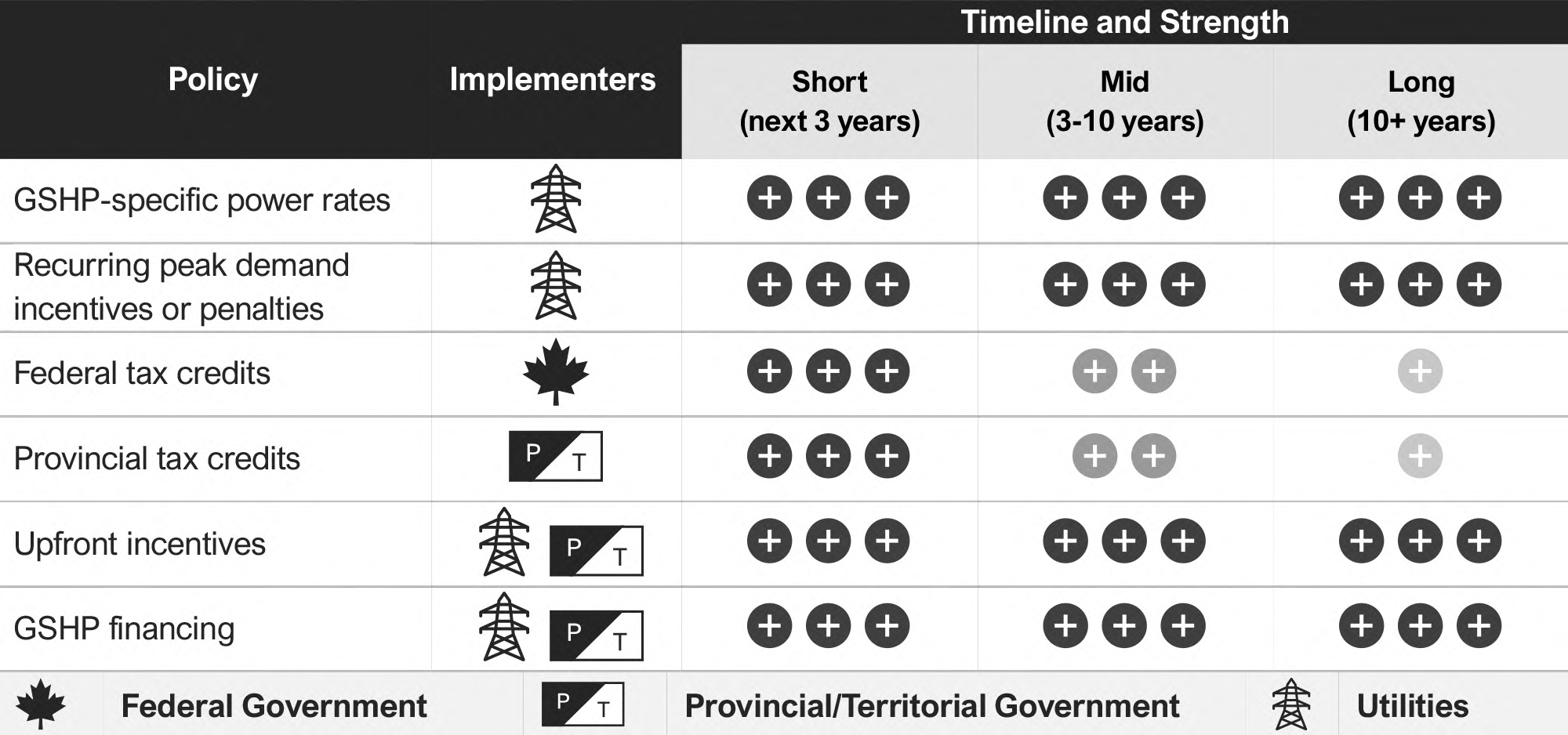
Our study finds that an optimal mix of policies aimed at increasing GSHP adoption could create a triple-win situation for Canadians: lower costs, increased GHG reductions from space heating, and a better alignment of costs and benefits. The following policies are key to unlocking the cost and environmental benefits of GSHPs for Canada, by transferring some of the social and grid benefits of GSHPs to those who must bear the capital costs:
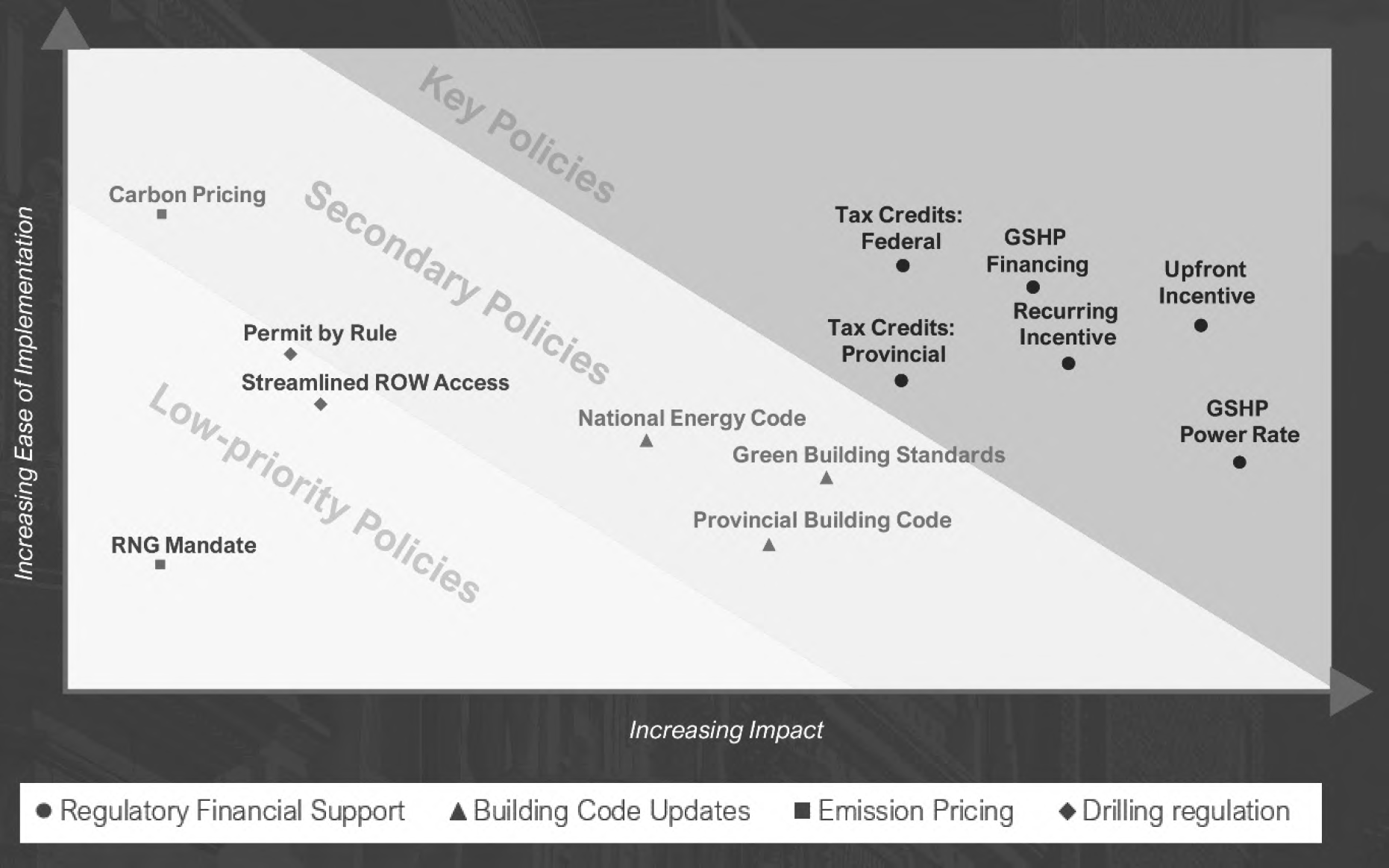
To perform the policy assessment, Dunsky investigated the policies implemented in four international jurisdictions leading in GSHP adoption. We mapped international policy successes and market barriers onto the Canadian context based on insights from a series of interviews with Canadian policy and industry leaders. Policy options were then assessed for their potential to impact GSHP adoption by addressing market barriers, recognizing the full value of GSHPs, and correcting the cost-benefit misalignment. In parallel, we assessed policy ease of implementation to find the policies that combine maximum impact and feasibility.
The results of this analysis are outlined in the full Policy Roadmap figure (section 5 of the report), summarized in the following prioritization matrix:
We recommend a combination of policies. Different policies address different barriers and will stay in the market for varying lengths of time. In addition, there are provincial and territorial variations in barriers and, therefore, effective policies. A blend of policies, such as substantial utility incentives combined with favourable building codes, will likely have more impact than one strong policy in isolation. Development of several policies concurrently can ensure broad market coverage and sustained support for GSHP adoption.
By focusing on the Key and Secondary Policies, federal, provincial, territorial, and municipal governments and utilities can tackle the most pressing barriers and recognize the significant cost savings that will come with increased GSHP adoption in Canadian communities. Policy-supported GSHP adoption will benefit Canadian pocketbooks, electrical grid, and climate targets.
Saving energy saves you money – Get up to $5000 in grants for geothermal heat pump installations
If you haven’t heard the great news already, on June 4 the Canadian government made an announcement regarding the availability of a residential grant program for energy efficient upgrades to existing homes. Of course geothermal heat pumps are a part of that program and qualifying for rebates is straightforward.
Participants are eligible for up to $5,600 under the initiative. This includes up to $600 to cover the cost of having a EnerGuide home energy advisor complete both pre-retrofit and post-retrofit audits, and $3000 for a geothermal heat pump replacement or $5000 for a new geothermal heat pump installation.
Homeowner books an energy advisor for a pre-retrofit EnerGuide evaluation (residents of Quebec and Nova Scotia need to apply directly through their provincial programs to book their EnerGuide evaluation)
Contractor completes geothermal heat pump replacement or new installation. Once installation is complete, provide customer with invoice and the two completed attestation forms
Homeowner books their energy advisor for post-retrofit EnerGuide evaluation
Questions?
If we can do anything to address your questions let us know. We are all here to help you through the process.
The Economic Value of Ground Source Heat Pumps for Building Sector Decarbonization
We can get there from here. A new study conducted by Dunsky Energy Consulting highlights the unique advantages of ground-source heat pumps, not just to individual building occupants, but to the electricity system, as Canada prepares to electrify buildings and reduce carbon emissions. As in other jurisdictions, Canada’s electricity grid and power supply capacity must be capable of meeting peak demand.
Plans to replace our current reliance on carbon-based fuels with electric modes of heating have created legitimate worries about how to ensure capacity to meet demand spikes.
The study concludes that if the heating of homes and buildings across Canada were electrified using ground source heat pumps rather than air source heat pumps (which have been assumed as the default in most electrification scenarios) there would be billions of dollars in net savings for Canada’s electric system, as opposed to net costs. That’s because very high ground source heat pump efficiencies, unaffected by outdoor temperatures, will help mitigate the peak electricity generation requirements of the grid.
“Switching just 10% of homes to ground source instead of air source heat pumps would save between $26 billion and $49 billion,” said Stan Reitsma, President of the OGA, “which equates to a net saving to Canada’s electric system of more than $40,000 for every household choosing this option, and that’s after allowing for the cost of installing these systems.” Given the improved understanding we now have about this return on investment, it is not unreasonable to contemplate a higher adoption rate. The study estimates that at a 30% market adoption rate, Canadians would enjoy net savings of $148 billion.
Said Martin Luymes, VP of Government and Stakeholder Relations at HRAI. “While the latest air source heat pumps perform at impressive efficiencies, a unique benefit of ground systems is their ability to perform consistently at high efficiencies regardless of outdoor air temperatures, due to their reliance on more stable thermal energy stored in the ground. Deployed at scale they will effectively ‘flatten the curve,’ reducing peak electricity demand for the whole grid.”
The Dunsky study quantifies the system-wide benefits of this technology, demonstrating that the avoided electricity system development costs will more than pay for the investment in these heating systems. “The results confirm that the goal of de-carbonizing heating in Canada can indeed be met without requiring massive electricity system upgrades,” said Reitsma, “if we start investing now in smart technologies like ground source heat pumps.”
The analysis was commissioned by the Ontario Geothermal Association (OGA) in partnership with the Heating, Refrigeration and Air-conditioning Institute of Canada (HRAI), partly as a review of another analysis undertaken by the ICF on behalf of the Canadian Gas Association (CGA), which excluded ground source heat pumps and consideration of their unique ability to reduce peak load impacts on the grid. But the Dunsky analysis found questionable assumptions and some data difficulties in the ICF document. More likely assumptions and technology efficiencies led to the conclusion that Canadians will benefit greatly from electrification involving ground source heat pumps.
Members and any other interested parties can download the study from this site and can lift the social media elements and republish them on your own web and social media sites. The HRAI is working to ensure the right people in government departments are aware of the study’s findings.
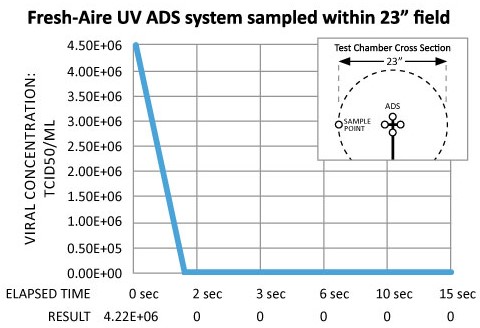
Fresh-Aire UV, a world-leader in HVAC ultraviolet disinfection systems, has successfully completed phase-1 thirdparty testing of their residential, commercial, and healthcare products for effectiveness against SARS-CoV-2 (the virus that causes COVID-19 disease). In the test report titled “SARS-CoV-2 Neutralization by Germicidal UV Light System from Fresh-Aire UV” the systems delivered greater than 4-log inactivation (>99.99%) on the SARSCoV-2 virus within 0-2 seconds of exposure to Fresh-Aire UV UVC 254nm light systems.
The testing was conducted by Innovative Bioanalysis a CAP, CLIA, and AABB certified laboratory (CA, USA). The test was designed to model exposure time comparative to inactivating the SARS-CoV-2 virus in the moving airstream within the HVAC or ventilation system. Products tested were the Fresh-Aire UV ADS™ (ductmounted airborne disinfection) for commercial and healthcare applications, Blue-Tube XL™ (HVAC coil and airborne disinfection) for commercial and healthcare applications, and APCO-X™ (HVAC coil and airborne disinfection with VOC/odor reduction) for both residential and commercial applications. Phase-2 testing is currently underway.
INACTIVATES >99.99% OF SARS-COV-2 WITHIN 0-2 SECONDS! According to Aaron Engel, Vice-President of Business Development at Fresh-Aire UV: “Fresh-Aire UV has been manufacturing proprietary germicidal UV systems for 20 years, and with everything we know about the SARS-CoV-2 virus combined with our testing experience, we were confident our systems would be very effective at inactivating the virus. We now have independent verification of the successful inactivation of the SARS COVID-19 virus and an even better understanding of how well our disinfection systems perform within the HVAC system, duct work and on surfaces. We are thrilled.”
Since the onset of the COVID-19 pandemic, Fresh-Aire UV has been providing UV system recommendations for residential, educational, commercial and healthcare facilities. Fresh-Aire UV systems were also used in the FDA sponsored testing of UVC’s ability to disinfect and extend the life of N95 masks as published in the American Journal of Infection Control. With the latest SARS-CoV-2 phase 1 test, Fresh-Aire UV now has validation as a global provider of germicidal UV systems for air and surface disinfection.
Fresh-Aire UV is recognized the world over as a leader in the areas of UV light disinfection and indoor air quality. Our products reduce indoor air pollution, sterilize viruses, bacteria, and mold, neutralize odors and VOCs, and provide chemical-free air and surface disinfection. Fresh-Aire UV is the innovation leader with numerous patents and industry awards, including the AHR Innovation Award for Indoor Air Quality for 2011 and 2020.
Energy savings from top to bottom. No matter how you heat.
Get custom advice and up to thousands of dollars in incentives.
The Total Home Energy Savings Program offers money back on efficiency upgrades on everything from insulation and air-sealing to high efficiency central heating systems to windows, doors, and more.
Lower your energy bills
Increase comfort
Help the environment
It all starts with your initial Home Energy Evaluation. For $99, a Certified Energy Advisor will evaluate your home – from the attic to the basement- to find out where your home needs upgrades. Your initial Home Energy Evaluation will give you customized recommendations to improve your home’s space and water heating energy efficiency. You could also be eligible for free energy savings products!
SPACE HEATING EQUIPMENT INCENTIVES
If your existing primary heating system is electric (of any kind including heat pumps), oil, or gas (natural gas or propane) then you must move up the Efficiency Hierarchy or move to a more efficient system in your category.
EFFICIENCY HIERARCHY
PRIMARY HEATING SYSTEM
Most Efficient
Geothermal heat pump
⇧
Air source heat pump
⇧
Electric resistance heating* (i.e. electric baseboard)
⇧
Gas
Least Efficient
Oil
Whatever your existing fuel source, you are eligible for incentives towards biomass heating options.
BIOMASS HEATING
Wood or pellet boiler or furnace, Pellet stove, Wood stove
If your existing heating system uses wood or pellets, then you must purchase a more efficient system or any qualifying system from the Efficiency Hierarchy. Installations must meet all applicable codes.
*Note: Incentives are not offered for electric resistance heating; it is shown in the table to illustrate what systems electric resistance (baseboard) users can upgrade to.